

The Great Potential of DNA and RNA in Anti-Aging and Brain Health Improvement
Nucleotides are the basic building blocks of DNA and RNA. Currently, the most prominent ingredient in this category on the market is undoubtedly PDRN (Polydeoxyribonucleotide, i.e., DNA sodium salt extracted from salmon reproductive cells). Abundant research has demonstrated its multiple efficacies, including anti-inflammatory, antioxidant, whitening, and cell regeneration-promoting effects. Consequently, it has become a highly sought-after functional ingredient in the medical aesthetics and cosmetics industries.
However, if we broaden our perspective beyond mainstream discourse and explore more in-depth research on nucleotides, we may discover that their potential extends far beyond these known applications.
Anti-aging has always been a significant topic in health medicine, particularly regarding the use of nutritional ingredients to delay the signs of aging.
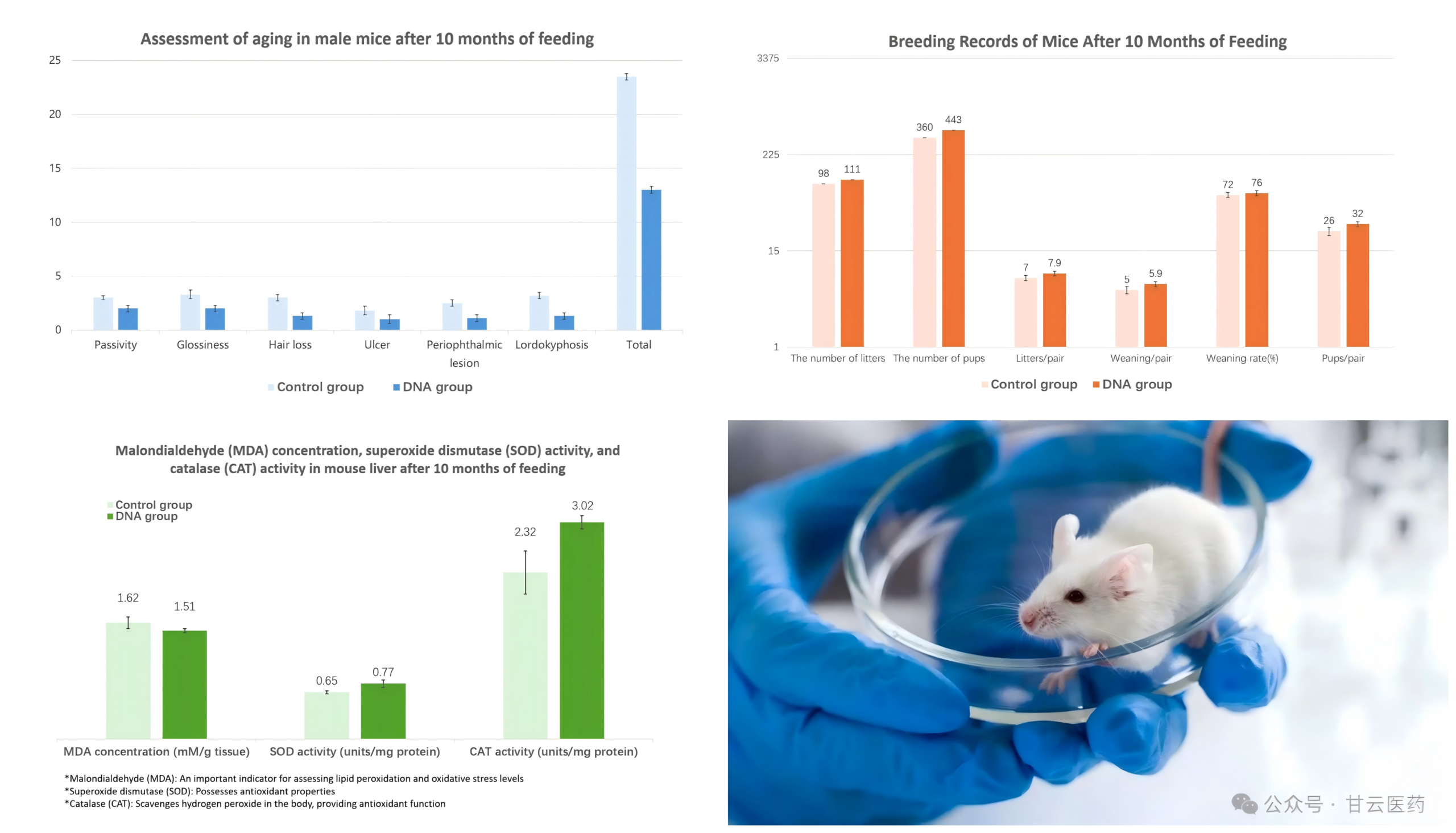
In an article titled “Effects of Dietary DNA from Chum Salmon Milt on Memory and Age-related Changes in Senescence-accelerated Mice”, researchers conducted a controlled experiment using senescence-accelerated prone (SAMP8) mice. The experimental group received a diet supplemented with 0.1% (w/w) chum salmon milt DNA, while the control group received a standard DNA-free diet. Results indicated that the DNA-fed group demonstrated superior outcomes in four key areas: senescence scores, fertility, antioxidant capacity, and memory function.
Coincidentally, an article from Peking University published in May, titled “Nucleotides as an Anti-Aging Supplementation in Older Adults: A Randomized Controlled Trial (TALENTs study)”, specifically investigated yeast-derived nucleotides—components of RNA—as an anti-aging supplement for older adults. Researchers conducted a 19-week, double-blind, randomized controlled trial involving 121 adults aged 60 to 70, who were randomly assigned in a 1:1 ratio to either a nucleotide supplementation group (1.2 g/day) or a placebo group. The final results demonstrated that, compared to the placebo group, the nucleotide group showed a significant reduction in median DNA methylation age (a metric for assessing biological age) and improved multiple health indicators, including insulin sensitivity, muscle mass, and visceral fat. Importantly, no adverse events were observed throughout the trial, confirming the safety of the supplementation.
As people age, they become more acutely aware of declines in their memory or learning ability—sometimes this is even more difficult to accept than external signs of aging.

In an article titled “A Nucleoside-Nucleotide Mixture May Reduce Memory Deterioration in Old Senescence-Accelerated Mice”, researchers used young (1-month-old) and old (7-month-old) senescence-accelerated mice as subjects. The control group received a standard diet, whereas the experimental group received the same diet supplemented with a nucleoside-nucleotide mixture. After 14 weeks of feeding, the mice underwent an avoidance test.
The results indicated that aged mice receiving the mixture showed superior memory performance compared to the control group, while no such difference was observed in young mice. Subsequent analysis of brain morphology revealed that the experimental group had a significantly lower percentage of specific brain cells containing lipofuscin (a senescence marker) than the control group. These findings suggest that dietary supplementation with a nucleotide-nucleoside mixture may be linked to delayed age-related brain morphological degeneration and improved specific memory functions.

Parkinson’s disease is a neurodegenerative disorder that is prevalent in the elderly population. The various motor and non-motor symptoms associated with the disease significantly compromise patients’ quality of life. Although its etiology remains unclear, numerous studies have demonstrated that neuroinflammation plays a crucial role in the progression of Parkinson’s disease.

In the development of numerous anti-inflammatory functional ingredients, researchers have turned their attention to DNA components derived from salmon. In an article titled “A Nucleoprotein-Enriched Diet Suppresses Dopaminergic Neuronal Cell Loss and Motor Deficit in Mice with MPTP-Induced Parkinson’s Disease,” researchers conducted a controlled trial on mice fed salmon nucleoprotein (extracted from salmon roe, consisting of a DNA and protamine mixture). Results demonstrated that, compared to mice without nucleoprotein intake, nucleoprotein-fed mice exhibited significantly reduced motor deficits, mitigated dopaminergic neuronal loss, lower superoxide anion levels (suggesting suppressed oxidative stress), and decreased microglial activation (indicating diminished neuroinflammatory response). The study suggests that dietary supplementation with salmon roe nucleoprotein could serve as an effective preventive measure to delay the onset of Parkinson’s disease.
Similarly, research presented in the paper “Stress Reduction Potential in Mice Ingesting DNA from Salmon Milt” demonstrated that ingestion of DNA-Na extracted from salmon milt suppressed the expression of inflammation-related genes in the hippocampus of aged mice. These findings further suggest that dietary DNA ingestion may inhibit brain inflammation induced by stress, which tends to increase with age.
As outlined above, the benefits of nucleotides extend far beyond cosmetics and aesthetics. When taken as dietary supplements, they have shown considerable promise in counteracting aging, enhancing cognitive function, and mitigating neuroinflammation. We are confident that ongoing research and expanding industrial applications will unlock even greater potential.
To harness these possibilities, GenCloud Pharmaceuticals has partnered with leading international suppliers to introduce premium DNA-Na and RNA products. Our DNA-Na product is extracted and purified from wild salmon using exclusive extraction and purification technologies, achieving a polynucleotide content of over 90%. We have also developed low-molecular-weight DNA and RNA variants with enhanced bioavailability, making them particularly well-suited for nutraceutical and functional food formulations.
Should the promise of DNA-Na align with your vision, or if you would like to access further technical information, please feel free to contact us.
We are eager to explore specific product applications and collaborative ventures, working together to identify new synergistic opportunities.

For further information, please contact: info@gencloud-pharma.com